

Relationship Therapy in NYC for Overthinkers & People-Pleasers
Individual therapy across New York & New Jersey for relationship anxiety, communication struggles, and attachment patterns that shape how you connect.

IF YOU’RE LOOKING FOR RELATIONSHIP THERAPY IN NYC, YOU ALREADY KNOW WHAT IT FEELS LIKE TO WANT CLOSENESS AND NOT QUITE LET YOURSELF HAVE IT

If your relationships keep hitting the same wall, that's not a character flaw or a sign you're too much or not enough. It usually means something older is running the show underneath, something that developed long before your current relationship, or the last one, or the one before that.
Relationship therapy in NYC at Mindful Roots Collective is individual therapy focused on the patterns that keep showing up in how you connect, communicate, and protect yourself in relationships. Whether you're in a relationship that feels stuck or you're single and tired of the same cycle repeating, this is a space to finally understand what's actually getting in the way.
Why Relationship Patterns Are So Hard to Change

⟡ Attachment patterns often start in childhood. The way you learned to stay connected to the people you depended on, whether that meant staying small, being easy, or never asking for too much, often developed in response to feeling hurt, rejected, or simply not seen.
⟡ Your nervous system responds before your mind does. The shutdown, the spiral, the urge to fix everything or disappear: these are old protective responses, not overreactions.
⟡ Intellectualizing keeps you one step removed. You can analyze the dynamic with precision and still not quite let yourself feel it. Understanding becomes its own kind of armor.
⟡ People-pleasing is a strategy, not a personality trait. At some point, keeping the peace became the way you stayed loved. In relationships, that looks like agreeing when you don't, or working so hard to be easy to love that you lose track of what you actually want. It worked, until it started costing you more than it gave.
⟡ Family and cultural expectations shape your blueprint for relationships. If you grew up in an immigrant or Asian American household, affection may not have been expressed openly through words, physical touch, or conversations about feelings, and that shapes what you come to expect, and accept, in relationships as an adult.
The patterns make sense when you trace them back. That's exactly what we do here.

Healing Your Inner Child in Relationship Therapy NYC

A lot of what shows up in your relationships today was learned long before you had words for it.
The part that goes quiet when you feel criticized, overworks to earn love, or braces for rejection even when nothing's wrong. They're echoes of a younger you who was just trying to stay safe.
⟡ The beliefs you carry aren't always yours to keep. "I'm too much." "My needs don't matter." "Love has to be earned." These were conclusions a younger you drew to survive. They can be revisited.
⟡ Your reactions in relationships often belong to a younger part of you. The shutdown, the spiral, the urge to fix or disappear: these are old protective patterns, not overreactions.
⟡ Insight alone doesn't always make them stop. Inner child work helps you actually feel the shift, not just understand it.

Healing your inner child is about giving those younger parts of you what they needed then, and what they're still asking for now.
In our work together, we slow down to notice when a younger part has stepped in, listen to what it's carrying, and help you respond from a steadier place.
You deserve that kind of care too.

Understanding Attachment Styles in Relationships

⟡ Anxious attachment: You crave closeness but worry it won't last, so you overanalyze, over-explain, and work to keep the relationship stable, often at the expense of your own needs.
⟡ Avoidant attachment: Intimacy feels uncomfortable, and you may find yourself pulling away right when things are going well.
⟡ Fearful-avoidant attachment: You want connection and find it frightening at the same time, like the relationship is pulling you in two directions at once.
⟡ Secure attachment: You feel comfortable with closeness and can navigate conflict without it threatening the relationship. This is also something that can be developed, even if it wasn't your starting point.
Insecure attachment often shows up in relationships as:
⟡ Overfunctioning: You're the one who reaches out first, smooths things over, and holds everything together, while wondering if any of it would exist without your effort.
⟡ Emotional shutdown: You go blank in conflict, not because you don't care, but because having feelings in front of other people started to feel like too much of a risk.
How Relationship Therapy in NYC Can Improve Your Relationships

In our work together, that might look like:
⟡ Understanding your emotional triggers. Getting curious about what sets off a reaction, and what that reaction is actually about beneath the surface.
⟡ Learning to see your sensitivity as information, not a liability. If you feel things deeply, absorb others' emotions easily, or get overwhelmed in ways that are hard to explain, therapy can help you understand what your nervous system is actually telling you and learn to trust it.
⟡ Setting boundaries that hold. Not just knowing where your limits are, but feeling confident enough to name them.
⟡ Recognizing patterns before they take over. Building enough self-awareness to catch yourself mid-pattern, and choose differently.
⟡ Strengthening self-trust. So your decisions in relationships come from your own sense of self, rather than fear, guilt, or the need for approval.
YOU MAY BENEFIT FROM RELATIONSHIP THERAPY IN NYC IF…
HOW DO I KNOW IF THIS IS RIGHT FOR ME?
⟡ You're lying next to your partner at night and the distance between you feels miles wide.
⟡ You've had the same conversation with your partner countless times now but nothing ever really changes.
⟡ You're the one who always reaches first, apologizes first, tries the hardest to make repairs and you're feeling exhausted always taking initiative
⟡ You're on another first date, smiling, performing, wondering if this one will be different.
⟡ You meet someone who feels familiar and comfortable and somehow it still falls apart the same way.
⟡ You're telling yourself to trust the facts -- this person has been consistent, kind, present -- and still can't quite let yourself believe it.

DOES THIS SOUND FAMILIAR?
Having the same fight over and over
Feeling lonely next to your partner
Resentment building quietly over time
Dreading the apps and small talk
Mistaking familiarity for chemistry
Second-guessing every text and signal
I CAN HELP YOU
→ Finally understand what's really underneath it
→ Rebuild connection that actually feels mutual
→ Address issues before they become too heavy to carry
→ Approach dating with clarity instead of exhaustion
→ Recognize real connection when it actually feels safe
→ Trust your instincts and what you actually want

MEET YOUR
RELATIONSHIP THERAPIST IN NYC
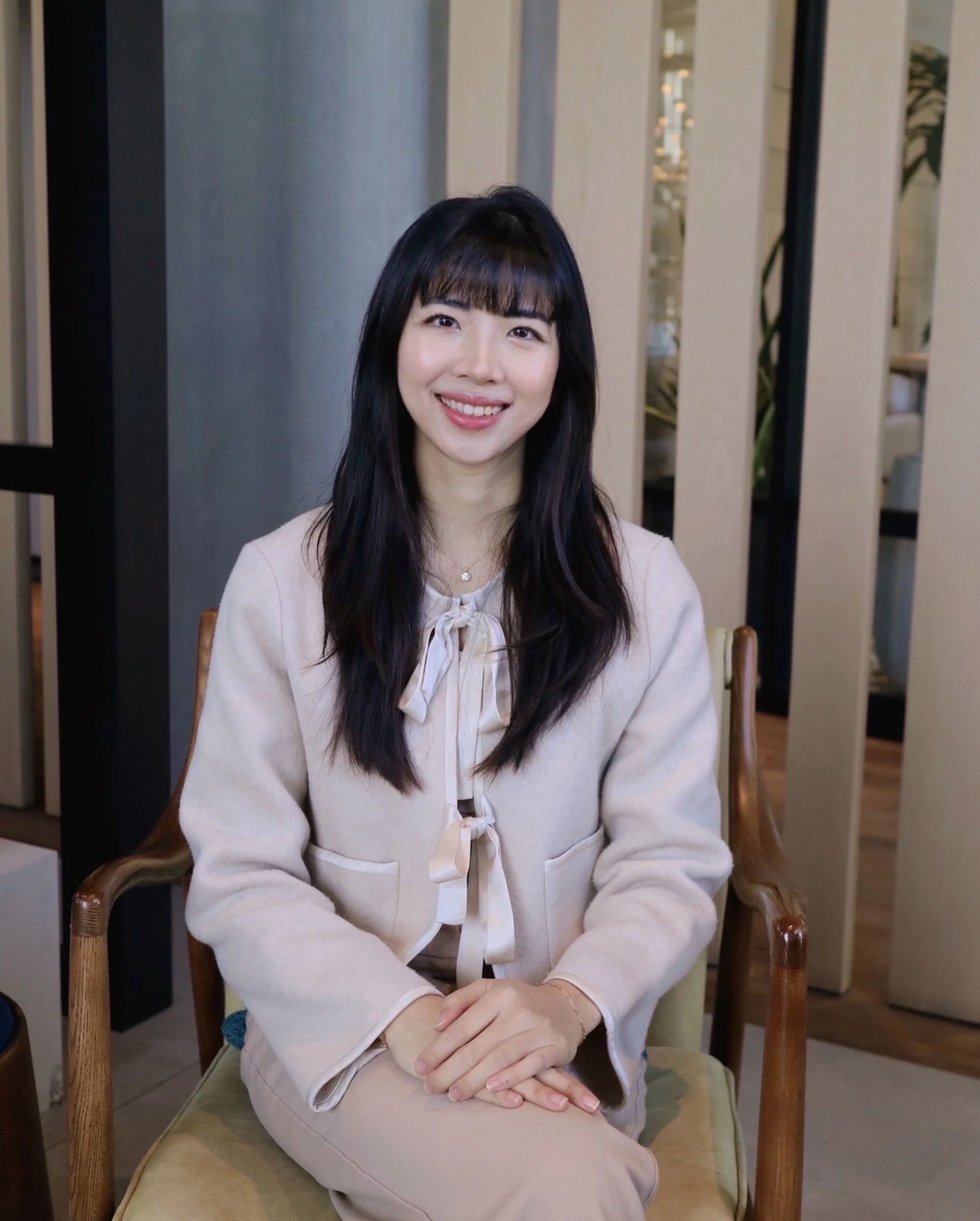
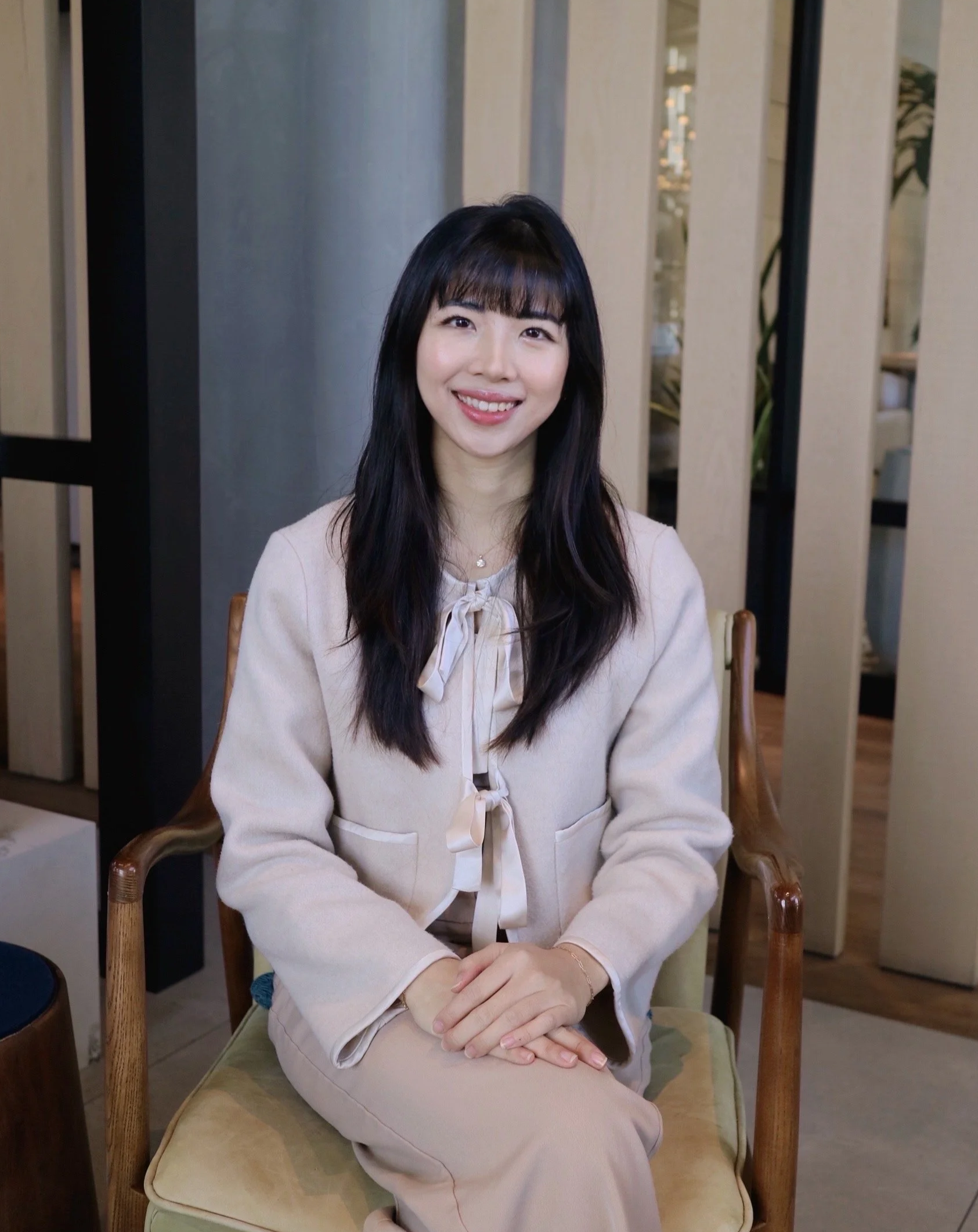
Hi, I'm Mandy, a Licensed Clinical Social Worker and Creative Arts Therapist. I help adults who are high-functioning on the outside but exhausted on the inside: the overthinkers, the overachievers, the people who have it together by every external measure and still can't quiet the noise.
My approach draws on EMDR, IFS, and somatic work. Because knowing something intellectually and feeling it change are two very different things. The work here starts with the body, not just the mind, to get underneath the patterns you've already tried to think your way out of.
I also bring a personal lens to this work. As a 1.5-generation immigrant, I understand what it's like to carry the weight of expectations, push through at the expense of yourself, and not have a clear language for what you're feeling. That context matters here.
This is a space where you don't have to perform, explain yourself, or have it all figured out before you begin
Through EMDR, somatic, and attachment-based work to get to the core of where these patterns began, so they can start to shift.

step 1: We slow down and get curious about what's really happening.Before trying to fix anything, we simply notice: How do you show up in conflict? In closeness? In silence? What patterns keep repeating…and where did they come from? Understanding is the foundation for everything else.

step 2: We explore how your past shows up in your present relationships.Together, we look at the family dynamics, cultural messages, and old wounds that shaped how you love, fight, and attach. Through this process, we making sense of why you do what you do, so you can start to break cycles that aren’t serving and choose differently.

step 3: We build new ways of relating that actually work for you and feel like youWith awareness as our foundation, you'll practice setting boundaries, expressing needs, and showing up as your full self, whether you're in a relationship or looking for one. Over time, connection starts to feel less like survival and more like home.
How EMDR and IFS Help Rewrite Relationship Patterns

You've probably already spent a lot of time thinking about your relationships, understanding your patterns, knowing exactly why you do what you do. And still, something stays stuck. Some wounds are stored in the body, in the nervous system, in the parts of you that learned long ago that closeness wasn't safe. That's where EMDR and IFS come in.
EMDR helps your nervous system reprocess the experiences that shaped how you attach, including:
⟡ The moments that taught you it wasn't safe to need someone.
⟡ The rejection or abandonment that made closeness feel like a risk.
⟡ The early experiences that made trust feel like something you couldn't afford.
IFS helps you get curious about the parts of you that show up in relationships, rather than fighting them:
⟡ The part that shuts down in conflict to avoid saying the wrong thing.
⟡ The part that gives endlessly, hoping it will finally be enough.
⟡ The part that pushes people away right when things start to feel too close.
Together, these approaches are at the heart of the relationship therapy I offer in NYC, tracing patterns back to their roots so something in how you love, and how you let yourself be loved, can begin to shift.
-
Not at all. Many of the people I work with are single, newly out of something, or somewhere in between. Relationship therapy isn't just for couples in crisis. It's for anyone who wants to understand the patterns they bring into relationships, whether that means figuring out why the same dynamics keep showing up, working through dating anxiety, or simply getting clearer on what you actually want and need from a relationship.
-
Couples therapy focuses on the dynamic between two people in the room. Individual relationship therapy focuses on you: your attachment patterns, your triggers, your history, and the ways those things shape how you connect with others. For many people, this is actually where the most meaningful change happens, because you get dedicated time and space to work on your side of the relationship without managing anyone else's process at the same time.
-
Yes. Dating anxiety often has less to do with dating itself and more to do with deeper fears around rejection, abandonment, or not being enough. In our work together, we look at what's underneath the anxiety: the patterns that make it hard to be vulnerable, the attachment wounds that make uncertainty feel unbearable, and the beliefs about yourself that show up when you put yourself out there. Over time, the goal is to approach dating from a more grounded, clear-headed place rather than from fear or survival mode.
-
I work with adults navigating a wide range of relational challenges, including relationship anxiety, communication struggles, conflict avoidance, people-pleasing, emotional distance, and repeating patterns across relationships. I also work with people processing breakups, navigating cultural or family expectations around relationships, and those who are single and wanting to understand themselves better before entering something new.
-
It depends on what you're working through. Some people come in with a specific pattern they want to understand and shift, and start to notice meaningful change within a few months. Others find that once they begin, they want to go deeper, exploring the roots of how they attach and relate, which tends to be a longer process. We'll check in regularly on how things are feeling and adjust as we go. Most sessions are weekly, especially at the start.
Frequently Asked Questions


Relationship Therapy in NYC and Across New York & New Jersey
Mindful Roots Collective offers relationship therapy for adults across New York City, including Manhattan, Brooklyn, and Long Island City (Queens). Sessions are available via secure telehealth platform for residents of New York and New Jersey, including clients in Jersey City, Hoboken, and across Northern New Jersey.
Many of the people I work with already understand their patterns. They know where things come from, and yet the same dynamics keep showing up. As an relationship therapist in NYC, I also support clients navigating relationships shaped by intergenerational expectations, cultural roles, and families where feelings weren't always spoken out loud.
The version of you who can feel close to someone without losing yourself is still in there. Let's find them together.
Questions?
Ready to Schedule a Consultation Call?
Fill out the form and I’ll get back to you as soon as possible.
I look forward to hearing from you!